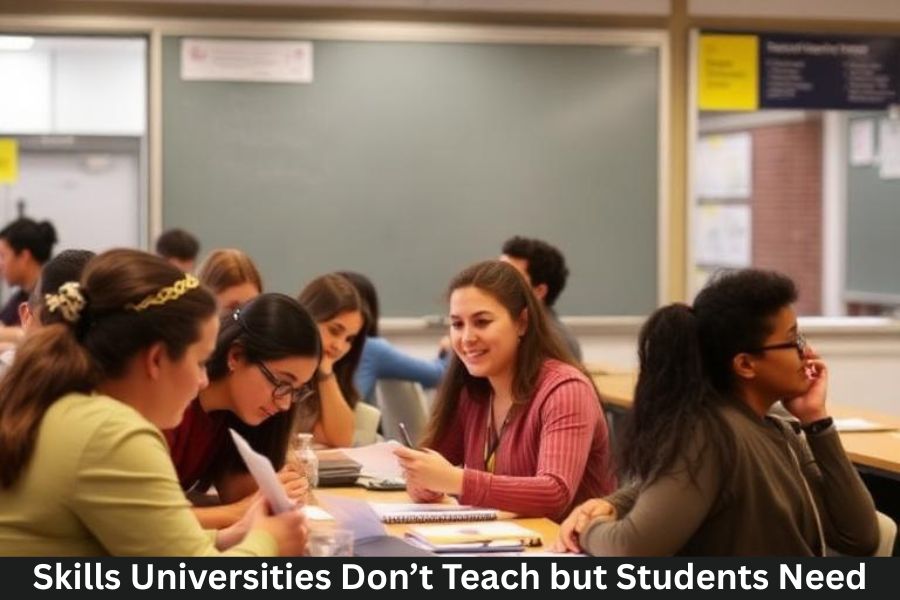
Walk across any university campus and you’ll see smart, motivated students carrying laptops, books, and big dreams. But here’s the uncomfortable truth—many of them graduate feeling unprepared for real life. Why? Because universities focus heavily on academic knowledge while quietly skipping some of the most essential life and career skills.
Why Degrees Alone Are No Longer Enough
A degree used to be a golden ticket. Today, it’s more like a basic entry pass. Employers want more than grades; they want adaptable, emotionally intelligent, and self-aware individuals who can solve problems and communicate clearly. Knowledge gets you in the door, but skills keep you there.
The Real World vs the Classroom
In classrooms, problems have clear instructions and fixed answers. In real life? Not so much. You’re expected to figure things out, work with different personalities, manage stress, and still deliver results. That gap between theory and reality is where many students struggle.
Critical Thinking and Problem-Solving
Thinking Beyond Textbooks
Universities teach what to think, not always how to think. Critical thinking means questioning assumptions, analyzing situations, and making informed decisions—even when the answer isn’t obvious.
Making Decisions in Uncertain Situations
Life rarely hands you multiple-choice options. You’ll face ambiguous problems with incomplete information. The ability to stay calm, assess risks, and choose a direction is a survival skill in today’s world.
Emotional Intelligence (EQ)
Understanding Emotions at Work
You can be the smartest person in the room and still fail if you can’t manage emotions—yours or others’. Emotional intelligence helps you read the room, handle criticism, and respond instead of reacting.
Managing Stress and Relationships
Deadlines, pressure, and expectations don’t end after graduation. EQ teaches you how to cope without burning out and how to build healthy professional relationships.
Communication Skills
Verbal and Non-Verbal Communication
Clear communication isn’t about fancy words. It’s about clarity, tone, and confidence. Body language, eye contact, and listening matter just as much as speaking.
Listening as a Superpower
Most people listen to reply, not to understand. Active listening builds trust, prevents misunderstandings, and makes you stand out instantly.
Financial Literacy
Money Management Basics
Universities teach complex theories but skip basics like budgeting, credit scores, and debt management. Yet these decisions impact your daily life more than most exams.
Taxes, Savings, and Investments
Understanding taxes, emergency funds, and simple investments early can save years of stress later. Money skills equal life skills.
Time Management and Productivity
Prioritizing What Matters
Being busy isn’t the same as being productive. Time management helps you focus on high-impact tasks instead of drowning in to-do lists.
Avoiding Burnout
Knowing when to pause is just as important as knowing when to push. Sustainable productivity beats short-term hustle every time.
Adaptability and Resilience
Thriving in a Rapidly Changing World
Industries evolve, roles disappear, and new opportunities emerge. Adaptability keeps you relevant no matter how fast things change.
Learning from Failure
Failure isn’t the opposite of success—it’s part of it. Resilience helps you bounce back stronger instead of giving up.
Digital Literacy Beyond Social Media
Understanding Technology Tools
Knowing how to use productivity tools, data platforms, and digital collaboration software is essential in almost every career today.
Online Safety and Digital Ethics
Cybersecurity awareness, data privacy, and responsible online behavior are non-negotiable skills in the digital age.
Networking and Relationship Building
The Power of Professional Connections
Opportunities often come from people, not job boards. Networking opens doors you didn’t even know existed.
Building Genuine Networks
It’s not about collecting contacts—it’s about building meaningful relationships based on trust and value.
Leadership and Teamwork
Leading Without a Title
Leadership isn’t a position; it’s behavior. Taking initiative, being reliable, and supporting others makes you a leader anywhere.
Working Effectively in Teams
Teamwork means managing differences, resolving conflicts, and working toward shared goals—skills rarely graded in exams.
Negotiation Skills
Asking for What You Deserve
From salaries to deadlines, negotiation is part of daily life. Knowing how to ask confidently can change your career trajectory.
Conflict Resolution Techniques
Disagreements are inevitable. Handling them respectfully and constructively is a powerful professional skill.
Creativity and Innovation
Thinking Outside the Box
Creativity isn’t just for artists. It’s about finding better, faster, and smarter ways to solve problems.
Turning Ideas into Action
Ideas are cheap. Execution is everything. Innovation happens when creativity meets discipline.
Self-Awareness and Personal Branding
Knowing Your Strengths and Weaknesses
Self-awareness helps you choose the right roles, improve continuously, and avoid unnecessary struggles.
Building a Personal Brand Online
Your digital presence speaks before you do. A strong personal brand builds credibility and opportunities.
Career Planning and Job Readiness
Resume and Interview Skills
Degrees don’t write resumes. Students need practical guidance on presenting themselves effectively.
Understanding Workplace Culture
Office dynamics, professionalism, and expectations are often learned the hard way—unless you prepare early.
Ethics and Decision-Making
Integrity in Professional Life
Shortcuts may seem tempting, but ethics build long-term success and trust.
Making Values-Based Choices
Knowing your values helps you make tough decisions without regret.
The Future Skillset for Students
Lifelong Learning Mindset
Graduation isn’t the finish line. Continuous learning keeps you adaptable and competitive.
Skills That Will Matter Most
Human skills—empathy, creativity, adaptability—will matter even more in an automated world.
Conclusion
Universities do a great job teaching theory, but life demands more than academic excellence. The skills universities don’t teach—communication, emotional intelligence, financial literacy, adaptability—are the real game-changers. Students who actively develop these skills don’t just survive after graduation; they thrive. The good news? These skills can be learned anytime, anywhere. The earlier you start, the further you’ll go.
Frequently Asked Questions (FAQs)
1. Why don’t universities teach these essential skills?
Because traditional curricula focus on academic knowledge, often overlooking real-world application.
2. Can students learn these skills on their own?
Absolutely. Books, online courses, mentors, and real-life practice are powerful teachers.
3. Which skill is the most important to learn first?
Self-awareness and communication form the foundation for most other skills.
4. Do employers really value soft skills?
Yes. Many employers prioritize soft skills as much as technical expertise.
5. Is it ever too late to learn these skills?
Never. Skill development is a lifelong journey.