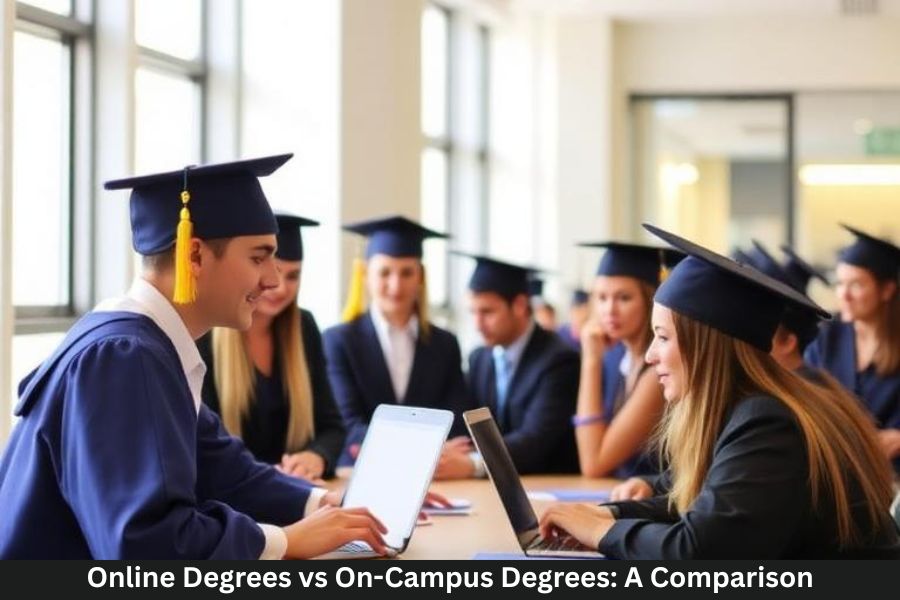
Higher education isn’t what it used to be—and that’s not a bad thing. Gone are the days when college meant only brick buildings, chalkboards, and rigid schedules. Today, students can earn degrees from their couch, a café, or even halfway across the world. So, how do online degrees stack up against traditional on-campus degrees? Let’s break it down in plain English.
The Evolution of Learning Models
Education has evolved like a smartphone—starting simple and becoming smarter, faster, and more flexible. Online learning emerged to meet the needs of working professionals, parents, and global learners. Meanwhile, on-campus education continues to offer structure, routine, and a full campus experience.
Why This Comparison Matters Today
With rising tuition costs and changing work environments, choosing the right degree format can impact your finances, career trajectory, and lifestyle. It’s not just about where you learn—it’s about how you live while learning.
What Is an Online Degree?
Definition and Core Features
An online degree is a program completed primarily through digital platforms. Lectures, assignments, discussions, and exams all happen online. Think of it as bringing the classroom to your screen.
Common Types of Online Programs
From associate degrees to PhDs, online education covers nearly every academic level. Popular fields include business, IT, healthcare, education, and data science.
Fully Online vs Hybrid Degrees
Fully online degrees require no campus visits, while hybrid programs blend online coursework with occasional in-person sessions.
What Is an On-Campus Degree?
Traditional Classroom-Based Learning
On-campus degrees follow a classic format—students attend lectures, participate in labs, and engage in face-to-face discussions. It’s the “college experience” many people imagine.
Typical Structure of On-Campus Programs
These programs run on fixed schedules with semesters, class times, and physical attendance requirements.
Residential vs Commuter Campuses
Some students live on campus, while others commute. Both offer access to facilities, faculty, and extracurriculars.
Flexibility and Convenience
Scheduling Freedom in Online Degrees
Online degrees are like a buffet—you choose when to eat. Most programs allow asynchronous learning, making it easier to balance work, family, and studies.
Fixed Timetables in On-Campus Degrees
On-campus programs require you to show up at specific times. This structure helps some students stay focused but can be limiting for others.
Cost Comparison
Tuition and Fees
Online degrees often have lower tuition rates, especially since institutions save on physical infrastructure. On-campus programs tend to be pricier.
Hidden Costs (Housing, Transport, Materials)
On-campus students may pay for housing, meals, parking, and commuting. Online learners usually avoid these expenses, making online education more budget-friendly.
Learning Experience and Teaching Style
Online Learning Environment
Online learning relies on videos, discussion boards, quizzes, and virtual projects. It’s self-paced but requires discipline.
In-Person Classroom Dynamics
On-campus classes allow real-time interaction, spontaneous discussions, and immediate feedback. It’s learning with a human touch.
Interaction and Networking Opportunities
Virtual Collaboration and Discussion Boards
Online programs use forums, group chats, and video calls to foster collaboration. While effective, it can feel less personal.
Face-to-Face Networking and Campus Life
On-campus students benefit from clubs, events, and casual conversations that often lead to lifelong connections.
Technology and Resources
Digital Tools Used in Online Degrees
Learning management systems, video conferencing, AI tutors, and digital libraries power online education.
Physical Resources on Campus
Libraries, labs, studios, and sports facilities provide hands-on experiences that online programs may lack.
Student Support Services
Online Academic and Career Support
Most online programs offer virtual advising, tutoring, and career coaching.
On-Campus Advising and Counseling
On-campus students can walk into offices for immediate support, which can feel more reassuring.
Assessment and Exams
Online Testing Methods
Online exams may include open-book tests, timed quizzes, or proctored exams using webcams.
Traditional Exams and Evaluations
On-campus exams are usually in-person, supervised, and structured.
Accreditation and Employer Perception
Are Online Degrees Respected?
Yes—if accredited. Most employers care more about skills and institution reputation than delivery format.
Employer Views on On-Campus Degrees
On-campus degrees still hold traditional prestige, especially in fields like law, medicine, and engineering.
Self-Discipline and Learning Style
Who Thrives in Online Learning?
Self-motivated, organized learners who enjoy independence excel online.
Who Benefits Most from On-Campus Learning?
Students who prefer structure, social interaction, and hands-on guidance often thrive on campus.
Global Accessibility
Learning Without Borders Online
Online degrees allow students to study from anywhere, breaking geographical barriers.
Location-Based Learning On Campus
On-campus education requires relocation or commuting, which may limit accessibility.
Career Outcomes and ROI
Job Opportunities After Online Degrees
Online graduates are landing competitive roles, especially in tech-driven industries.
Career Advantages of On-Campus Degrees
Campus recruiting, internships, and alumni networks can boost career prospects.
Pros and Cons Summary
Advantages of Online Degrees
- Flexibility
- Lower cost
- Global access
Advantages of On-Campus Degrees
- Networking
- Structured learning
- Campus resources
Key Drawbacks of Each Option
Online learning can feel isolating, while on-campus education can be expensive and inflexible.
How to Choose the Right Option for You
Questions to Ask Yourself
- Do I need flexibility?
- What’s my budget?
- How do I learn best?
Matching Education to Life Goals
Your degree should fit your life—not the other way around.
The Future of Higher Education
Blended Learning Trends
Hybrid models are becoming the norm, combining the best of both worlds.
What Lies Ahead for Students
Education will continue to evolve, offering more personalized and accessible options.
Conclusion
Choosing between an online degree and an on-campus degree isn’t about which is better—it’s about which is better for you. Online degrees offer flexibility and affordability, while on-campus degrees provide structure and rich social experiences. Like choosing between a smartwatch and a classic watch, both tell time—but in different ways. Pick the one that fits your lifestyle, goals, and learning style.
FAQs
1. Are online degrees easier than on-campus degrees?
No. They require the same academic rigor but demand more self-discipline.
2. Do employers prefer on-campus degrees?
Most employers prioritize accreditation and skills over learning format.
3. Can I switch from online to on-campus later?
Many institutions allow transfers, especially within the same university.
4. Are online degrees cheaper overall?
Generally yes, due to lower tuition and fewer living expenses.
5. Which option is better for working professionals?
Online degrees are usually better suited for full-time workers.